Key Takeaway: The USPTO continues to find companies with certain foreign-government ownership interests ineligible to pursue inter partes review (IPR). Companies involved in patent disputes should consider the ownership structure of an IPR petitioner, particularly where the petitioner may be owned or controlled, directly or indirectly, by a foreign government.
On October 23, 2026, United States Patent and Trademark Office (USPTO) Director John Squires issued a decision explaining his denial of a petition for inter partes review (IPR) filed by Meishan CRRC Fastening System Co., Ltd. (“Meishan”) challenging a patent owned by Howmet Aerospace Inc. (“Howmet”). Meishan’s petition challenged Howmet’s U.S. Patent No. 11,885,358, (the ’358 patent) entitled “BLIND FASTENER AND METHOD OF INSTALLATION THEREOF.” As reported by Law360, the Director’s denial was based on Meishan’s ties to the Chinese government rather than on the merits of Meishan’s prior art.
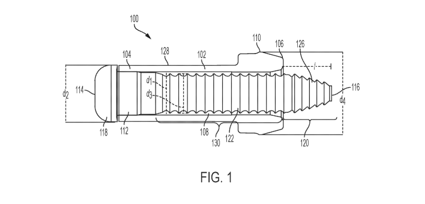
FIG. 1 of Howmet’s U.S. Patent No. 11,885,358
In its request for discretionary denial, Howmet argued that the petition failed to identify all real parties in interest, including the State-owned Assets Supervision and Administration Commission of the State Council (SASAC), a division of the Chinese government that, according to Howmet, “has the ability to control this IPR proceeding as the majority owner of Meishan.” In a motion for additional discovery, Howmet pointed to evidence that Meishan’s parent is affiliated with CRRC Corporation Limited, which is majority owned by CRRC Group, which in turn is wholly owned by the Chinese government. Meishan responded that it “independently retained, directed, and paid the legal fees of its counsel” and that no outside entity could direct or veto its filing. The Director rejected Meishan’s position and sided with Howmet, stating he was “persuaded that SASAC, a foreign government entity, is an unnamed [real party in interest]. Thus, Petitioner is ineligible to file an IPR, and the Petition is denied.”
The decision builds on the Director’s March 18, 2026, precedential decision in Tianma Microelectronics Co. v. LG Display Co., which held that the Supreme Court’s decision in Return Mail, Inc. v. United States Postal Service bars a foreign government from being a petitioner or real party in interest in an IPR. As the USPTO explained, the decision “puts all sovereigns on equal footing.” In Tianma, the petitioner was an affiliate of Aviation Industry Corporation of China (AVIC), a Chinese state-owned aerospace and defense conglomerate, and evidence that an AVIC entity owned “10% or more” of the petitioner’s stock was enough to put the issue in dispute.
The decision preserves the ’358 patent as Howmet asserts it in the District of Delaware against Stanley Engineered Fastening, LLC, and two Avdel entities, alleging that the Avdel Avbolt ECO line of blind fasteners infringes the patent.
The Howmet decision also follows other recent USPTO actions affecting IPR practice, including a March 11, 2026, memorandum adding discretionary institution factors related to U.S. manufacturing and small businesses. In light of these decisions, a petitioner’s ownership structure, including any foreign government ties, may be relevant for companies considering or defending against an IPR petition.
The Director’s decision is available here.


 Subscribe for News and Updates