Key Takeaway: Government contractors who infringe third party patents while performing work “for the Government” and “with the authorization or consent of the Government” are immune from liability for the infringement. The patent owner can only sue the government in the Court of Federal Claims for recovery of “reasonable and entire compensation.” Such immunity can even extend to commercial marketing activity involving very similar technology as developed under the government contract.
(February 4, 2026) AeroVironment, Inc. succeeded against Paul and David Arlton’s (the Arltons’) appeal at the Federal Circuit in Arlton v. AeroVironment, Inc., No. 2021-2049 (Fed. Cir. Feb. 2026) (nonprecedential). The Arltons’ lawsuit alleged that AeroVironment’s Mars “Ingenuity” helicopter developed for NASA, and its terrestrial copy called “Terry,” infringed U.S. Patent No. 8,042,763, entitled “Rotary Wing Vehicle”:
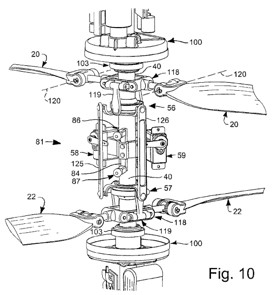
The Federal Circuit upheld the District Court’s decision in favor of AeroVironment, affirming that AeroVironment was immune from liability under 28 U.S.C. § 1498. Under § 1498, when a patent is infringed by a contractor performing work “for the Government” and “with the authorization or consent of the Government”, “the owner’s remedy shall be by action against the United States in the United States Court of Federal Claims for the recovery of his reasonable and entire compensation.” The Federal Circuit was not persuaded by the Arltons’ argument that § 1498 should not apply because the government’s contract to AeroVironment should have been awarded to the Arltons under the Small Business Innovation Research (SBIR) statute, 15 U.S.C. § 638. The court explained that “§ 638 does not limit the government’s discretion to assume liability under § 1498” because “§ 638 guides the government’s award of contracts among different private entities, [whereas] § 1498 governs who a patentee must sue for patent infringement.” The court did not reach the merits of infringement.
The court also held that AeroVironment’s demonstrations of the terrestrial copy Terry at various public events, including on a 60 Minutes segment and at meetings with potential investors, fell within the § 1498 immunity because the demonstrations “did not lead to any profit” for AeroVironment, and Terry was not offered for sale.
Government contractors should be aware of the broad scope of § 1498 immunity, as well as its limits. Here, the court found that the immunity extended to public appearances and demonstrations for potential investors because the demonstrations did not result in commercial profit or include offers for sale. The allegation that AeroVironment may have received reputational benefits was not enough to overcome the § 1498 immunity. But, the scope of § 1498 immunity is a fact-specific inquiry, and immunity may not apply under different circumstances.
Patent owners should be aware of their limited recourse under the § 1498 immunity, which effectively gives the government an eminent domain-like power over patents. Still, patent owners can seek “reasonable and entire compensation” from the government, and may have recourse against government contractors who offer to sell infringing products, or who make commercial profit from displaying work that was performed for the government.





 Subscribe for News and Updates