As we previously wrote, in the brave new world of AI, the ability of users to push the boundaries of creativity at breakneck speed raises new challenges for IP owners. Recently, I experienced that lesson firsthand.
When experimenting with Google’s AI Studio over the weekend, my 6-year-old son had the idea to create a website that would tell stories and generate pictures of the story. In less than 2 minutes, he created a fully interactive website, including the proposed name “Bedtime Story Weaver,” as pictured below:
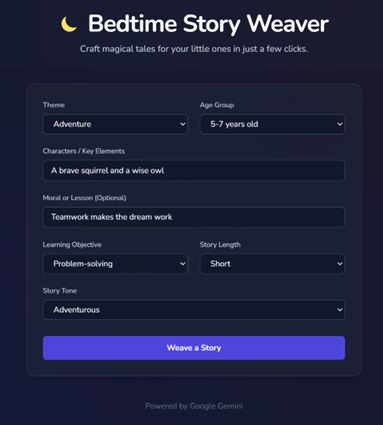
This was all done by typing basic words like “story telling for kids” in the prompt “Describe your idea.” So simple, even a 6-year-old with zero coding experience could do it.
At first, he wanted an adventurous story about a dragon named “Guthead” and a brave knight named “Arzoo.” My son typed in these basic words and clicked “Weave a Story.” A new page opened with a story and friendly, colorful pictures of the brave knight and the dragon.
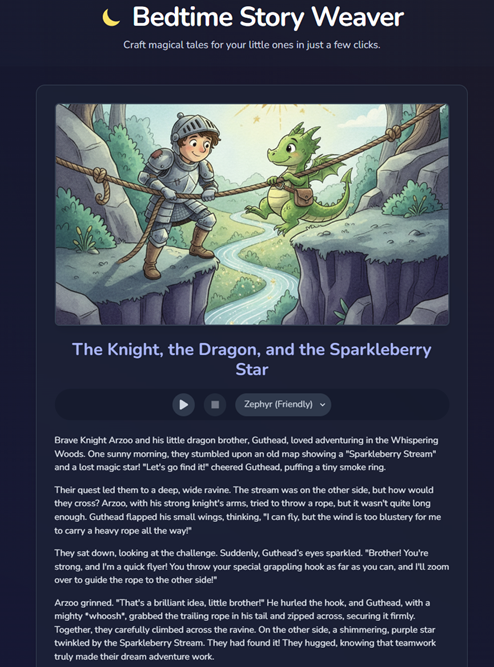
But my son’s imagination did not stop there. He next wanted a story about Sonic the Hedgehog going on an adventure with Mario from Super Mario Brothers. And so, by simply typing this into the prompt, he created a story and an image featuring these two well-known characters.

As an IP attorney, this was jaw-dropping. My sweet little son unwittingly created something that I spent over a decade of my life preventing others from doing.
This experience should raise alarm bells for intellectual property holders, who should be prepared for a potential tsunami of software applications and websites that push the boundaries of current IP law. IP holders will require new ways of dealing with the dramatic onslaught of potentially infringing content.
Recommendations and Next Steps for Brand Owners
As AI continues to democratize creative tools, brand owners must revisit their enforcement strategies, update their monitoring processes, and prepare for an unprecedented volume of potentially infringing content generated not by professionals, but by everyday users (including children).
At a minimum, brands must review their current monitoring tools to determine whether they are adequately capturing IP infringement. However, as the above illustration shows, this is likely insufficient. Instead, brand owners should go further and have people within their organizations test each new AI tool on the market to determine whether it includes internal safeguards to prevent users from generating unauthorized content or if the programs are more of an “open canvas” that places no restrictions. For the latter type of AI tools, brand owners should proactively reach out to the companies who publish these generative tools to persuade the companies to implement filters that prevent or at least mitigate the likely infringement. Rights owners should also have a robust enforcement program in place to take swift action, before the floodgates of infringement open and they are caught off guard.
However, brand owners should also recognize that consumers increasingly want to engage with content in new ways. Disney, for example, has expressed interest in allowing users to generate their own stories through a Disney+ subscription. Other brand owners may similarly benefit from understanding how their audiences wish to interact with their IP so they can build appropriate safeguards and create controlled, monetizable pathways for user-generated creativity.
In sum, AI-generated content will profoundly shape how both brand owners and consumers experience intellectual property in the coming years. Those brand owners who are the most proactive from an enforcement standpoint and from a content monetization perspective will likely be the winners in the AI arms race.
Postscript
Despite protests, whining, and even a few tears, I managed to convince my son that just as we must respect other children’s “toys” at school, we also must respect the “rights” of IP owners by not taking or using what belongs to others. Fortunately, Google’s platform includes a filter that prevents generating content involving well-known characters or protected IP. And, with that safeguard in place, we were able to return to story time, and all sleep a little better that night.




 Subscribe for News and Updates